Learning Time Sequencing Everyday Events in the Early Years

Time

Learning time sequencing everyday events is where time understanding actually begins—but it’s also the part most often rushed or overlooked.

Students are frequently expected to read clocks before they understand how time works in their own lives. As a result, they might be able to say a time, but they can’t explain what it means or connect it to real experiences.

If students don’t understand sequence, routines and order, then telling time becomes memorisation—not understanding.

What Is Learning Time Sequencing Everyday Events?

Learning time sequencing everyday events is the ability to organise actions and experiences in a logical, predictable order.

It includes understanding:

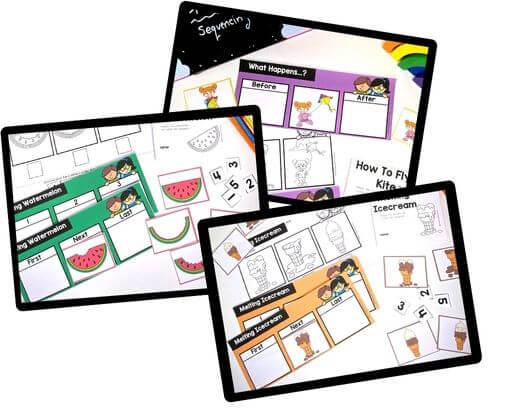
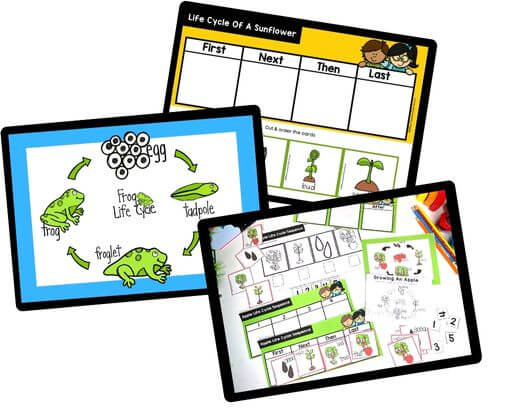
  • what happens first, next and last
  • how daily routines follow a consistent pattern
  • that time moves forward and events don’t happen randomly

In early years classrooms, time is not introduced through numbers—it is understood through real-life events and repeated experiences.

Why Learning Time Sequencing Everyday Events Matters Before Telling Time

Time is one of the most abstract concepts students learn.

Research in early mathematics, including work by John Van de Walle, shows that young learners make sense of time through familiar events before they can understand measurement. Children naturally organise their thinking around what happens during their day—routines, transitions and repeated patterns—long before they can interpret hours and minutes.

This is why learning time sequencing everyday events is not a warm-up skill—it is the foundation.

When this foundation is secure, students:

  • understand that events follow a predictable order
  • use time language with confidence
  • begin to compare how long activities take

When this foundation is weak, students often:

  • struggle to connect time to real situations
  • guess when ordering events
  • confuse before and after

What Learning Time Sequencing Everyday Events Looks Like in the Classroom

This learning is built through everyday classroom experiences, not isolated tasks.

You’ll see it when students can:

  • describe their day in order without prompts
  • explain what happens before or after an event
  • retell a story with events in the correct sequence
  • recognise that routines follow a consistent pattern

These are the early indicators of real time understanding.

Related Post: How To teach Non-Standard Measurement

Language for Teaching Learning Time Sequencing Everyday Events

One of the most important (and often overlooked) parts of teaching this concept is the language used every day in the classroom.

When teaching learning time sequencing everyday events, the language you use matters just as much as the activities.

Students need consistent exposure to:

  • Sequencing words: first, next, then, last
  • Relational language: before, after
  • Parts of the day: morning, lunchtime, afternoon, evening, bedtime

These help students describe the order of events rather than simply guess.

As understanding develops, introduce simple comparison language such as:

  • longer
  • shorter
  • takes more time

This builds an early sense of duration without relying on clocks.

The key is to embed this language naturally through everyday questioning:

  • “What happens next?”
  • “What comes before this?”
  • “Which takes longer?”

This is where real understanding develops—when students are regularly thinking, explaining and making connections.

Student Difficulties and Misconceptions in Learning Time Sequencing Everyday Events

While learning time sequencing everyday events may appear straightforward, many students experience underlying difficulties that can go unnoticed at first.

A common misconception is that events can be rearranged without consequence. Students may believe that routines are flexible rather than fixed, especially if they rely on personal preference instead of logical order.

Students also often confuse key time concepts such as before and after. They may be able to complete sequencing tasks correctly, but struggle to explain their reasoning when questioned. This indicates surface-level understanding rather than true conceptual knowledge.

Another difficulty is relying on memorisation. Students might sequence familiar routines correctly because they have repeated them often, not because they understand how or why the order works. When presented with unfamiliar scenarios or when the starting point changes, this understanding often breaks down.

Language is another significant barrier. Without strong understanding of sequencing vocabulary such as first, next, then, last, students may guess rather than reason. They may also struggle to connect sequences to parts of the day, such as morning or afternoon, limiting their ability to apply learning to real-life contexts.

Some students also find it challenging to compare events in terms of duration. Understanding that one activity takes longer or shorter than another requires a deeper level of thinking that develops over time and with explicit teaching.

Recognising these difficulties early allows teachers to move beyond simple task completion and focus on developing genuine understanding through discussion, questioning and real-life connections.

Learning Progression for Learning Time Sequencing Everyday Events

Understanding develops gradually and needs to be built over time.

Students move from:

  • recognising familiar routines
  • identifying what comes next
  • ordering simple sequences
  • explaining events using time language
  • comparing which events take longer or shorter

Only once this is secure should students begin working with:

  • o’clock
  • analogue time
  • digital time

Skipping this progression leads to gaps that show up later.

How to Teach Learning Time Sequencing Everyday Events Effectively

The most effective teaching happens when sequencing is embedded into daily classroom practice.

This includes:

  • talking through routines regularly
  • asking questions like “What happens next?” and “What happened before?”
  • using stories to explore sequence
  • encouraging students to explain their thinking

Research shows that repeated exposure and discussion are critical. Sequencing is not learned in a single lesson—it develops over time through consistent use.

How Learning Time Sequencing Everyday Events Connects to Telling Time

Sequencing is the bridge between real-life experience and formal time concepts.

Once students understand:

  • that events follow a consistent order
  • how routines structure their day

They can begin to:

  • connect events to times
  • understand duration
  • interpret clocks meaningfully

Without this connection, time remains abstract and disconnected.

Learning Time Sequencing Everyday Events: Teacher Questions Answered

Quick answers to common questions about teaching learning time sequencing everyday events in the classroom.

What is learning time sequencing everyday events?
Learning time sequencing everyday events is the ability to organise daily activities in the correct order and describe what happens first, next and last. It helps students understand how time works before learning to read clocks.
Why is learning time sequencing everyday events important?
Learning time sequencing everyday events builds the foundation for understanding time. Without it, students may read clocks but struggle to apply time to real-life situations or understand routines.
How do you teach learning time sequencing everyday events?
Teach learning time sequencing everyday events through real-life routines, storytelling, visual sequencing activities and consistent use of time language such as first, next, then and last. Students should be encouraged to explain their thinking, not just complete tasks.
What do students need to understand before telling time?
Before telling time, students need to understand sequencing, daily routines, and time language such as before, after and next. This helps them make sense of clocks rather than memorising times.
What difficulties do students have with learning time sequencing everyday events?
Students may think events can happen in any order, confuse before and after, rely on memorisation instead of reasoning, or struggle when sequences do not start at the beginning. These difficulties show gaps in understanding rather than simple mistakes.

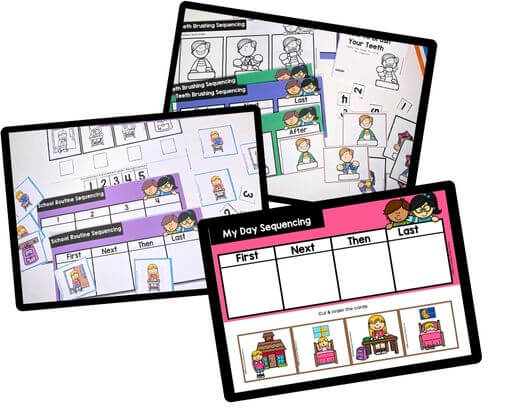
Routine-Based Sequencing Tasks

Teaching Guide: Teaching Foundation Measurement – AC9MFM02

Teaching Guide: Teaching Foundation Measurement – AC9MFM02

Teaching Guide - Measurement - PDF

This content is available on our Premium plan. Upgrade now to access this resource.
Foundation - Achievement Standard Rubrics - Time of Day - Morning, Day, & Night

Foundation - Achievement Standard Rubrics - Time of Day - Morning, Day, & Night

Foundation - Assessment - Editable PDF

This content is available on our Premium plan. Upgrade now to access this resource.
Sequencing Everyday Events (Time) – Lesson Launcher

Sequencing Everyday Events (Time) – Lesson Launcher

Foundation - Lesson Launcher - Teach Screen

This content is available on our Premium plan. Upgrade now to access this resource.
3-Step Sequencing Everyday Events - Washing Hands

3-Step Sequencing Everyday Events - Washing Hands

Foundation to Year 1 - Procedure & Sequencing Time - PDF

This content is available on our paid plans. Upgrade now to download this resource.
3-Step Sequencing Everyday Events - Ready For School

3-Step Sequencing Everyday Events - Ready For School

Foundation to Year 1 - Procedure & Sequencing Time - PDF

This content is available on our paid plans. Upgrade now to download this resource.
3-Step Sequencing Everyday Events - My Day Activities Pack

3-Step Sequencing Everyday Events - My Day Activities Pack

Foundation to Year 1 - Procedure & Sequencing Time - PDF

This content is available on our paid plans. Upgrade now to download this resource.
3-Step Sequencing Everyday Events - Paint A Picture

3-Step Sequencing Everyday Events - Paint A Picture

Foundation to Year 1 - Procedure & Sequencing Time - PDF

This content is available on our paid plans. Upgrade now to download this resource.
3-Step Sequencing Everyday Events – Pack Your Lunch

3-Step Sequencing Everyday Events – Pack Your Lunch

Foundation to Year 1 - Procedure & Sequencing Time - PDF

This content is available on our paid plans. Upgrade now to download this resource.
4-Step Sequencing Everyday Events - Get Ready For School

4-Step Sequencing Everyday Events - Get Ready For School

Foundation to Year 1 - Procedure & Sequencing Time - PDF

This content is available on our paid plans. Upgrade now to download this resource.
4-Step Sequencing Everyday Events - Breakfast Routine

4-Step Sequencing Everyday Events - Breakfast Routine

Foundation to Year 1 - Procedure & Sequencing Time - PDF

This content is available on our paid plans. Upgrade now to download this resource.
4-Step Sequencing Everyday Events - My Day

4-Step Sequencing Everyday Events - My Day

Foundation to Year 1 - Procedure & Sequencing Time - PDF

This content is available on our paid plans. Upgrade now to download this resource.
4-Step Sequencing Everyday Events - School Routine

4-Step Sequencing Everyday Events - School Routine

Foundation to Year 1 - Procedure & Sequencing Time - PDF

This content is available on our paid plans. Upgrade now to download this resource.
4-Step Sequencing Everyday Events - Washing Hands

4-Step Sequencing Everyday Events - Washing Hands

Foundation to Year 1 - Procedure & Sequencing Time - PDF

Oops, you need to log in to download this resource.

Sequencing Time Activities

Can't find what you're looking for?

Send us a request! Use this form to request a resource. Please give details of the learning area, topic, year level, curriculum links. We’ll be happy to take a look to see if we can fit it in. Unfortunately a request does not guarantee we will be able to make it!

"*" indicates required fields

This field is for validation purposes and should be left unchanged.
Name*
NOTE: Please refrain from using this form to request subscription cancellations, as we do not handle subscription management for members. Members can manage or cancel their subscriptions through their Dashboard or via Paypal or your credit card company. Please see the FAQ page for detailed instructions.

contact-us